

Quick Summary: How to Use ChatGPT for Small Business Without Wasting Time on Bad Prompts
- Set up your ChatGPT account strategically. Sign up at chat.openai.com using a business email address and choose a plan that fits your needs. You may start with the free version to test, then upgrade to ChatGPT Plus ($30 AUD/month) for solo operators or ChatGPT Business ($38-46 AUD/month) for teams handling customer data.
- Master the RACE framework for effective prompts. When learning how to use ChatGPT for business, structure every prompt with Role (who ChatGPT should act as), Action (what you want), Context (specific details about your business and audience), and Execute (format, tone, and length specifications) to get quality outputs immediately.
- Build a reusable prompt library. Save your best-performing prompts organised by category. Use placeholders you can quickly customise for different situations.
- Always fact-check ChatGPT outputs before publishing. Verify all statistics, legal requirements, dates, and professional advice with authoritative sources like government websites and industry regulators. ChatGPT can confidently generate plausible but completely fabricated information.
- Create a custom ChatGPT for your business (paid plans only). Configure a personalised GPT pre-programmed with your business information, brand voice, target audience, and common tasks. This way, you skip providing context every time and maintain consistency across all outputs.
What if you could hire a 24/7 assistant for $20/month who never sleeps and handles everything from customer emails to content creation? Across Australia, small businesses are doing exactly that: using ChatGPT to level the playing field against larger competitors, saving 10+ hours weekly whilst delivering personalised service that builds loyal customer bases. Knowing how to use ChatGPT for small business is now a non-negotiable.
Before you read on, we’ll tell you what other agencies won’t: ChatGPT isn’t a “set and forget” solution. Stop seeing it as a magic wand and more like a power tool that is brilliant in skilled hands and mediocre when used carelessly.
The businesses seeing the best results aren’t simply copying and pasting generic prompts. They’re investing thoughtful effort upfront by creating specific instructions and continuously refining outputs. That creates something worth posting. The time you save comes from ChatGPT’s speed, not from skipping the thinking.
What Can ChatGPT Do for Australian Businesses?
Developed by OpenAI, ChatGPT is an AI chatbot trained on vast amounts of text. Unlike traditional chatbots with scripted responses, ChatGPT understands context and generates human-like text on virtually any topic.
When learning how to use ChatGPT for small business operations, here’s what it can handle for companies:
Content Creation:
- Customer service emails
- Social media posts
- Blog articles and website copy
- Product descriptions
- Proposals and documents
Research & Analysis:
- Industry trends and best practices
- Quick explanations of complex topics
- Competitor information
- Report summaries
Communication:
- Translation for Sydney’s market
- Tone adaptation for different audiences
- Template creation
Planning:
- Meeting agendas
- Process documentation
- Business plan frameworks
What ChatGPT CANNOT Do
- It Can’t Replace Human Judgement. While ChatGPT does amazing in drafting an introductory email, it doesn’t know whether now is the right time to launch based on your cash flow and market conditions.
- It’s Not 100% Accurate. ChatGPT can “hallucinate” facts. Always fact-check important information, especially legal requirements and statistics.
- It Can’t Replace Customer Relationships. Use it to save time on routine communications. However, don’t let it replace the personal touch that makes your small business special.
What ChatGPT Version Is Best for Sydney Businesses?
When researching how to use ChatGPT for small business, understanding its pricing helps you make better decisions. This section answers all your queries about pricing, including how much is ChatGPT workspace.
| Plan | Cost | Best For | Key Features |
| Free | $0 | Testing before committing | GPT-5 with usage limits (switches to GPT-5 mini) Slower response times Limited access during peak hours Standard features only |
| ChatGPT Plus | A$30/month per user | Solo business owners, consultants, freelancers | Full GPT-5 access Faster response times Priority access to new features No usage caps |
| ChatGPT Business | A$38/month (annual)A$46/month (monthly) | Teams handling customer data (minimum 2 users) | Everything in Plus Admin controls Team workspace Your data is NOT used for training |
| ChatGPT Enterprise | A$90/month per user | Large organisations (150+ users minimum) | Everything in Business Unlimited usage Advanced admin features Custom integrations |
How to Use ChatGPT for Small Business: Setting Up a ChatGPT Account
Remember that you have to systematise the platform to make the most out of it. Here’s how to use ChatGPT for small business.
Step 1: Set Up Your Account
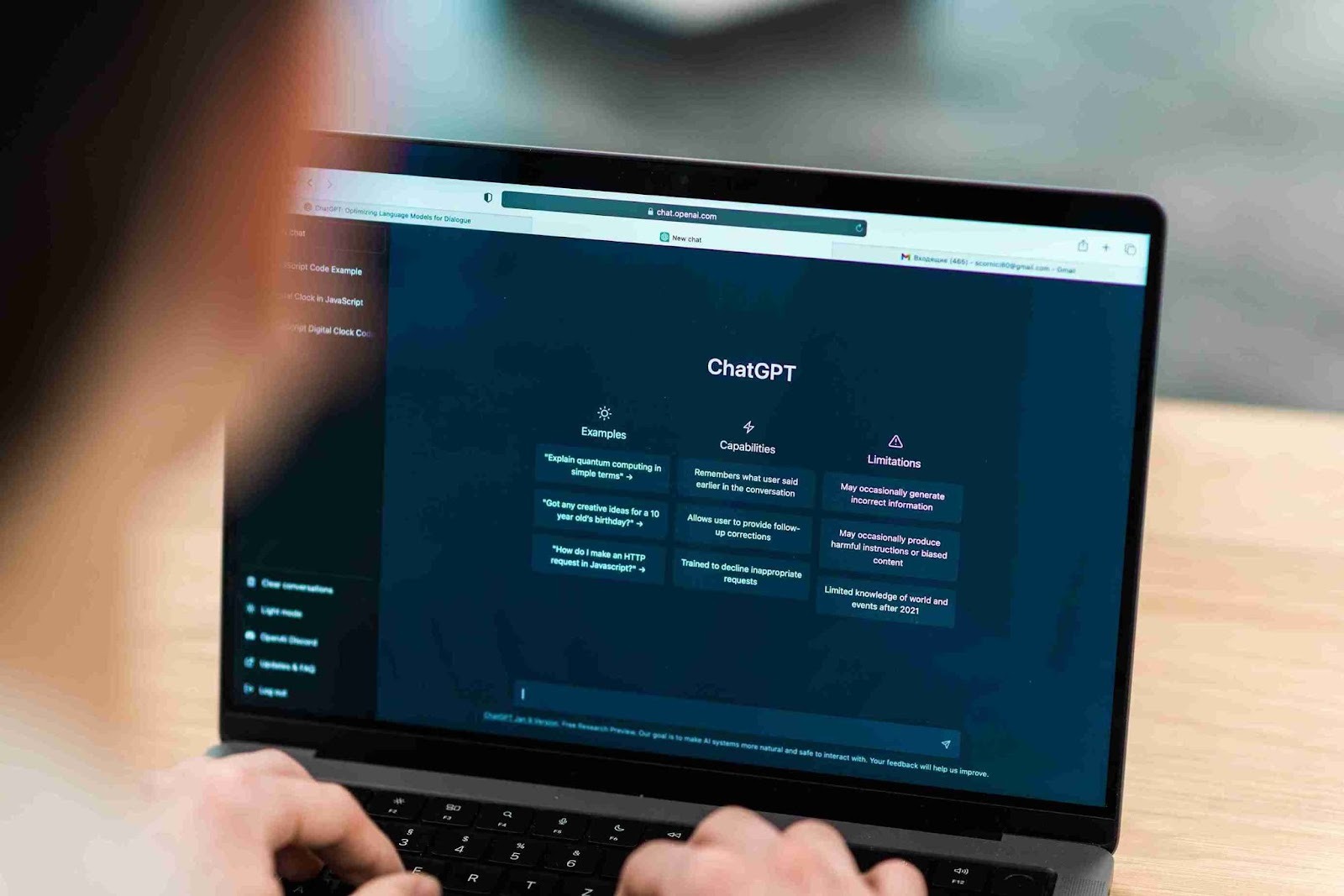
Go to chat.openai.com and sign up with your email or Google account. Choose your plan. Starting with the free version lets you test before committing, but if you’ve used ChatGPT before, feel free to select any of the paid versions.
Bonus tip: Use a business email address rather than a personal one. This makes it easier to upgrade to a Business plan later and keeps work separate from personal use.
Step 2: Master The RACE Framework for Prompts
The quality of ChatGPT’s output depends entirely on your input quality. The RACE Framework is a four-part structure for every ChatGPT prompt.
- Role. Tell ChatGPT who it should act as, like “Act as a social media manager” or “You are an experienced business consultant.”
- Action. Specify exactly what you want, such as “Write a social media post.”
- Context with specific details. This could be “for a Sydney cafe” or “targeting professionals aged 30 to 45.”
- Execute by specifying tone and length: This could be “in 150 words, friendly but professional” or “include 3 hashtags.”
Step 3: Build A Prompt Library
When learning how to use ChatGPT for small business, prompts are so integral. Create a simple document to save your best-performing prompts. Organise by category, may it be social Media or email Marketing. Make your prompts reusable by using placeholders like: “Write a [word count]-word [content type] for [topic] targeting [audience] in a [tone] tone. Include [specific elements].”
Template example:
“Act as a social media manager for a [industry] business in [Sydney location]. Write a [platform] post about [topic].
Target: [audience].
Tone: [specify].
Word count: [number].
Include [hashtags/CTA/other elements].”
Simply fill in the brackets each time you need them.
Step 4: Creating a Custom ChatGPT for Your Business (Optional, Plus/Business Plans Only)
If you’re on a paid plan, you can have a custom chatgpt for your business tailored specifically to your business needs.
A custom GPT is a personalised version of ChatGPT pre-programmed with your business information and brand voice so instead of providing context every time, your custom GPT already knows your business.
To create a custom ChatGPT for your business, select the ChatGPT interface, click “Explore GPTs” in the sidebar and select “Create a GPT.” Use the GPT Builder to describe what you want, then provide your business details, tone preferences, and common use cases.
Very important: Don’t create and leave it be. Take time to test and refine until it works perfectly, then save for private use or share with your team.
What to Include in your custom ChatGPT for your business:
Configure your GPT with essential business information:
- Business name, industry, and location
- Target audience and customer demographics
- Brand voice and tone guidelines
- Common products or services you offer
- Website (as research)
- Frequently needed formats (email templates, social posts, etc.)
How to Fact-Check ChatGPT Outputs
Part of knowing how to use ChatGPT for small business is to double-check information. ChatGPT generates content based on patterns rather than verified databases or real-time knowledge. Considering this, it will confidently tell you about Australian regulations that never existed and cite studies that sound perfectly reasonable but don’t exist in real life.
For Sydney businesses, this is embarrassing and even legally dangerous. Publishing wrong information about compliance professional advice creates liability and destroys the trust you’ve spent years building.
What You Must Verify
Australian legal and regulatory information tops the list. ChatGPT’s knowledge of current laws proves unreliable at best and dangerously wrong at worst. These rules change constantly, and the consequences of getting them wrong are serious. Always verify with official .gov.au sources and industry regulators. This step remains mandatory, never optional.
Statistics also deserve special suspicion. ChatGPT invents numbers that sound plausible—”64% of small businesses report increased productivity” or “Sydney consumers spend an average of $2,400 annually on dining out.” Before publishing any statistic, verify the source exists and that the number is accurate. Check the Australian Bureau of Statistics or peer-reviewed research. When you cannot find the original source, skip using the statistic entirely.
Dates and current events create another trap. ChatGPT’s knowledge cutoff is January 2025, so it cannot accurately reference anything after that date. Sydney-specific current information requires independent verification.
Finally, professional advice in medical, legal, financial, or technical areas requires expert review before publication. ChatGPT, as with other LLMs, can write plausible-sounding advice that could be outdated and dangerous. These outputs serve as starting points for professionals to review rather than final advice to publish.
The 10 minutes spent verifying information always beats the hours spent managing the consequences of publishing false claims.
Frequently Asked Questions
How to use ChatGPT for small business?
Always use the RACE framework: define the Role, specify the Action and Context, and Execute with format details.
What are the best ChatGPT prompts for small business?
The best prompts are specific and structured. For example:
“Act as a customer service manager for a [industry] business in Sydney. Write a 150-word email responding to [situation]. Include [specific details]. Tone: [specify].” Save your best-performing prompts in a library organised by category—email marketing, social media, customer service, and content creation—using placeholders you can customise quickly.
How much is ChatGPT workspace?
ChatGPT Plus costs approximately $30 AUD/month per user for individual use. ChatGPT Business costs around $38-46 AUD/month.
Can I create a custom ChatGPT for my business?
Yes, if you have a ChatGPT Plus, Business, or Enterprise plan. Custom GPTs let you pre-program your business information, brand voice, and common tasks so you skip providing context every time.
What are the best ChatGPT prompts for writing a business plan?
Use specific prompts for each section.
For executive summary: “Write an executive summary for [business name], a [industry] business in Sydney. Include what we do, problem solved, target market, and revenue model. 300 words, professional tone.”
For market analysis: “Write market analysis for a [industry] business in Sydney. Include market size, target segments, key trends, and competitive landscape. 400 words. Use placeholders for statistics.” Customise each section separately rather than asking for a complete plan at once.
DeepSeek vs ChatGPT: which should I use?
You might have come across DeepSeek when searching about how to use ChatGPT for small business. DeepSeek is free and excels at technical tasks like coding and mathematics, with better accuracy in complex problems. In comparison, ChatGPT offers a more polished interface and better creative content. It can also be integrated easier with business tools.
Most Sydney businesses know ChatGPT exists, but few use it wisely. While learning how to use ChatGPT for small business helps with drafts and ideas, professional content marketing requires local market knowledge and expert execution.
Mastering how to use ChatGPT for small business is not the end-all-be-all. Olivetree Marketing delivers comprehensive digital marketing services for Sydney businesses, working with businesses across healthcare, construction, real estate, and more to develop marketing strategies that build genuine connections with Australian audiences. Contact us today to see how we can help.
We’ve created a comprehensive prompt library specifically for Sydney small businesses to help you get started immediately. This free resource includes all 50 prompts from this guide, organised by category and ready to customise for your business. Each prompt uses the RACE framework and includes placeholders for quick personalisation. Simply fill in the brackets.
Simply download the library and save it to your workspace. These prompts will save you the trial-and-error phase of learning ChatGPT.
Wondering How to Use ChatGPT For Small Business? Start With These 50+ Free Prompts (Click Image to Access)